
Lawn care
Drought-proofing a Springfield lawn: a realistic plan.
Ozarks summers are hot and dry, then suddenly not. Here is what actually keeps a lawn alive through that, without dumping water on it daily.
March 15, 2026 / 5 min read
Springfield summers are hot, dry, and unforgiving to lawns that were never set up for it. Most of the lawns we see struggling each July were not killed by lack of water in July. They were killed in March and April when nobody was thinking about July yet.
A drought-proof lawn is mostly about three things: cutting at the right height, watering deeply but rarely, and improving soil so it can hold water longer when it shows up.
Cut taller than you think.
The single most common cause of summer-stressed lawns is short mowing. Cut grass shorter than three inches and you cook the crown of every plant on a 95-degree day. Taller grass shades the soil, slows evaporation, and grows deeper roots.
Water deeply, not daily.
Shallow daily watering trains roots to stay near the surface. The first time it gets hot, those shallow roots dry out and the lawn browns. Water one inch, once or twice a week, early in the morning. The lawn will look softer and feel softer because the roots are reaching down for what they need.
Fix the soil, not just the symptoms.
Ozarks clay holds water until it is saturated, then sheds it. A lawn growing in heavy clay starts drought-stressed the moment the soil dries. Core aeration in fall, topdressing with compost, and overseeding are the boring annual habits that turn a clay-bound lawn into one that can actually hold a hot summer.
Edges and beds matter too.
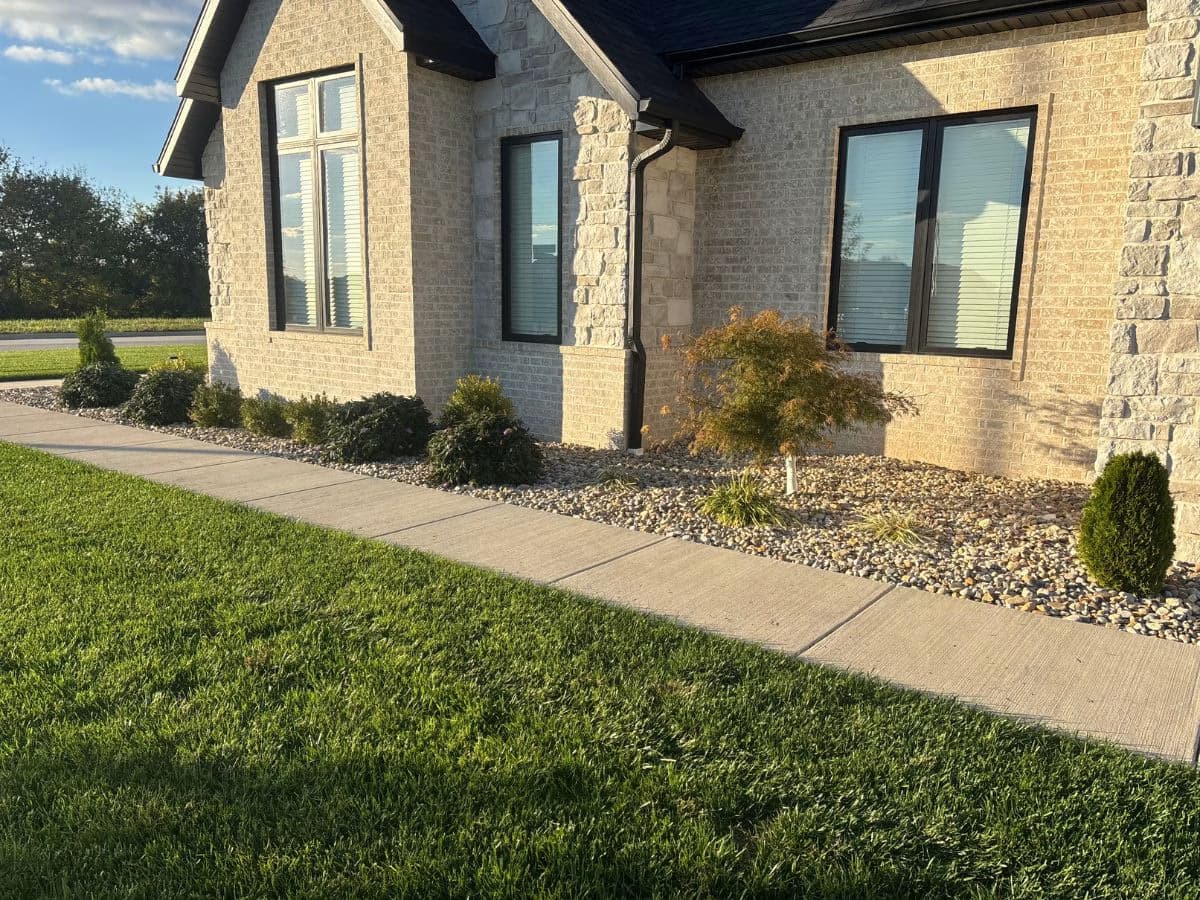
Sharp bed lines, fresh mulch, and properly mowed edges make a struggling lawn look intentional even when the grass itself is having a hard week. Sometimes the answer is not more water. Sometimes it is the rest of the landscape doing some of the visual work.